
Blackies

Updated: Aug 12
On most days, the water is so clear at Blackies, you can see right through it. See the few shells on the bottom, the little fish swimming by, the ripples in the sand on sea floor. When the sun reaches a certain height, tiny grains of sand dispersed throughout the water reflect the light, and it looks like I'm swimming in a sparkling snow globe, shimmering within a crystal clarity. For me, the clarity of the water sometimes makes it hard to catch a wave, because I don't know I'm on it. There's nothing to see. I stand up on my board and it feels like I'm ten feet in the air, because I cannot see the water between my board and the bottom. It feels like I'm flying through the air. Magical.
I also love Blackies because of the beautiful people who are there. Surfers, for the most part, are a pretty special bunch of people. Riding waves is inherently joyful. It's hard to be unhappy when you're so connected to nature, though some people do deny this bliss and achieve a startling unhappiness out there. Blackies is a beginner break, too, so we rarely experience the greedy, ego-driven "core lords" that dwell in Huntington Beach. Obviously, some people find a way to be miserable, but mostly, I've found surfers to be quite relaxed and pleasant.
My favorite person at Blackies is Don. Don was 85 years old when I met him three years ago and he absolutely shreds. He has been surfing since before I was born. A tiny Asian guy, he shuffles across the beach to the water, carrying his bright green board with old movie posters embedded in it at his side. His pop up is better than mine will ever be. He is out every day on his longboard, gliding on big and baby waves. He is friendly and supportive. Always a big hug, a new sticker for my car, the local surfing newspaper, or a word of advice, I love seeing Don at Blackies.
Blackies is a fundamentally safe place. The Sisterhood is a fundamentally safe place. Good people. But I’m still living with the legacy of my upbringing. Groups of people are precarious for me. Normal and natural group dynamics often trigger my safety meters; I see danger when there isn’t any, and my mind spins when I perceive rejection. The ever changing, undependable, and insecure nature of relationships situated in real life is something I’m working to accept. If freedom comes from understanding my conditioning, particularly around insecure attachment, then relationships are the center of the wound and the understanding. I’m trying to figure out how to be in relationship and maintain my emerging sense of autonomy and agency, my authentic self. This is a long and somewhat rambling post, because I'm working my shit out on this one. It's a toughie.
Sisterhood
Blackies will always be home for the Sisterhood. It's part of our origin story -- taking those classes at Endless Sun Surf School brought us together. And we are still together, though part of having an origin story means that the current story is different. We are changed and I have changed -- and we are all continually changing. This clarity is evolving and comes with difficulty for me.
The Sisterhood is different now, expanded and fractured into little subgroups. Like those causes and conditions of life, we are ever changing -- coming together and breaking apart. We are still a presence, though, don't worry. Surf Sister Reihna got plowed into the other day on a busy day at Blackies – some aggro male just ran her over on a wave. She was bruised, but mostly shocked. The Surfline surf cams showed that the guy saw her and just kept going. She did drop in on him – she was in the wrong. But there’s no call for creating injury. The guy was way out of line -- some idiot on a foamie pretending to be a core lord. The whole chat blew up in defense of our friend.
A critical mass of us still gets together on occasion, but it’s no longer every weekend as a big group. There are many separate chats and subchats as people find who they are closer to within the big group and abilities and preferences develop. It is still a positive and supportive place overall, but typical group dynamics have set in and typical changes in people's lives have affected how often they can go out. People flow in and out of the group. No big break ups, no startling arguments, just the natural ebb and flow of life drawing people together and sending them apart. Across the seasons and the years, there is more and less activity depending on conditions. A natural settling into everyday life. Everything, it seems, behaves as a wave, even us.
So my relationship to it has changed. This community has been and continues to be instrumental to my healing. I could not have advanced in the early months of my journey without their positive influence, support, and initial consistency -- without their form of love showing me a new way to be in relationship. These amazing women showed me a new way to be in the world, a new way to parent, and a new way to be with each other. It was so empowering.
Idealization
At the beginning, I’m sure I idealized the Sisterhood. A lifelong consequence of neglect, I idealized my caregivers instead of believing that they might not be great at parenting. I saw the best in them and unconsciously ignored the worst. I saw what I wanted to see, because it was safer. I cut off my own needs in order to maintain connection and belonging, stayed small to avoid unwinnable conflicts. So I didn't see the reality of my home life. With my surf sisters, I did the same. I saw what I wanted to see, mistook proximity for intimacy, and maybe confused my emotions with what others were feeling. I didn't see the whole reality, a fuller context. Through several disappointments born from my own misguided assumptions about the nature of these relationships, now I do. Like the anger and sadness that set me on this path in the first place, disappointment is an invitation to think more deeply about my deeply held assumptions about how relationships work.
As we all settle into our little subgroups where we feel most comfortable, I am learning new lessons, a new way to see, perhaps a new and more mature way of being in relationship. We only learn in community and often, the lessons are painful. Losing an ideal is painful. So, I am reorganizing the Sisterhood in my mind to something less than it was, but also more appropriate -- not idealized, but still lovely, a good place. As I heal, I am able to see and accept everyone’s humanness, including my own, more immediately go to compassion instead of defensiveness, and understand more deeply that each of us is on our own path. And... it feels like loss to me. This reorg feels like a loss, a new kind of grief.
Relationships are a struggle for me. People are hard and confusing. Early in my life, as a result of neglect, I abandoned my self, my needs and desires, in order to fit in and get care from adults who did not see me. I realize that I never expected anyone else to actually see me or get my needs met in relationship. Others abandoned me, so I abandoned myself. That self-abandonment was an injury that I am overcoming; I am no longer willing to not be seen in relationship. I want to see some effort put into me for a change -- from myself and others. I am doing a good job of meeting my own needs at this point. I care for myself in really positive ways and perhaps it has had a spillover effect. Now that I have deemed myself worthy of care, I am working out how to be in authentic relationships with others without abandoning my own needs. How do I do this? How do you balance your own needs in relationship with others who also have needs? What are the lessons that are arriving? Clarity is coming slowly.
Self-Blame or Agency?
The first major lesson is around self-blame and agency. From Tricycle’s Dhamma Wheel course, "The phrase 'seeing ownership of deeds' refers to karma. Recognizing that everything that happens is a matter of cause and effect gives rise to equanimity. It is not raining to spoil your picnic, your toothache is not a form of punishment, and you are not having a bit of luck because you deserve it. When we regard things as the result of conditions rather than as entangled in our own sense of self, equanimity begins to develop." None of this fracturing of the Sisterhood has anything to do with me -- in a good way, very little has anything to do with me. It isn't my job or anyone else's to keep it together; in fact, one of the best parts of the Sisterhood is its self-organizing nature. We still connect once in a while. We are still there. There are still messages in the group chat, but they are on the level of 30/week rather than 300/week. The connection, from my view, is just not as intense in a measurable, quantitative way. My own self-blame around this is almost entirely gone. Almost. I'm still sad about the loss of the intense and consistent connection some days, and I still wonder if there is something I can do to bring it back. These thoughts are echoes of self-blame, an inflation of my agency; and they are whispers instead of screams. I am watching things happen, not feeling like I can or would want to interfere with the natural order of things unfolding as a result of cause and effect.
The idea of causes and conditions from Buddhism tell me that life unfolds. We exist in a web of interbeing, that causes lead to effects, which are the new causes of new effects: things just happen. Acknowledging the ebb and flow of personal relationships has allowed me to not take things so personally. To realize the causes and conditions of life just unfold and have consequences, but those consequences can be positive, negative, and neutral. That consequences are sometimes painful, but they are almost never personal. I think depersonalization, the antidote to self-blame, is the second biggest lesson I've learned here -- why we need people, how to need people, and how to navigate the changing nature of relationships as they grow and contract, grow again, and fade away. We are constantly weaving in and out of people's lives, touching briefly, perhaps deeply, and sailing forth -- each on our own wave. It's a more autonomous way of being in relationship. Just like Blackies on a good day, you can see several surfers up at the same time, some going right, some left, several waves have riders, some on a party wave, some alone. It's a beautiful ballet of surfers, syncing with the energy of the sea and sometimes, with each other, but each on their own board. I feel great peace when I watch these days unfold from the beach. Now, I am learning to find peace as these days unfold on land, knowing that I am a part of the unfolding, on my own board, others on theirs, and knowing I do not control it.
This is a hard lesson to learn for me and for anyone with insecure attachment. Having grown up without that secure base, I have been constantly latching onto relationships as if they are a lifesaver and I'm a drowning woman in a stormy sea. I've been a part of big friendship groups before, but there were always individual connections maintained within the whole - a rope that tied my lifesaver to the boat of the group. I felt it necessary to reach out to people one-on-one to keep up with them and cultivate the group's continuity. For several decades, I have seen it as my job to keep everyone and everything together, so releasing that job description has been quite a feat. Letting everything be as it is, knowing things will change, and also knowing I have little to do with that change? That change doesn't mean dissolution? Seeing the group as a collection of surfers riding waves together individually instead of all being in one boat? Finding peace amidst the constantly changing conditions? This is a monumental shift in perception. Even as I imperfectly embody this perception, understanding this new way to see is huge.
Redefining "Friend"
The locus of connection with the Sisterhood has shifted in my mind. Previously, I thought of it as a group of individual connections that I needed to maintain on a personal level, but now I realize the locus of connection is the group itself. We connect when we go out. This is confusing to me, because I'm used to connecting individually with people, so the lack of individual connection feels initially rejecting. It feels rejecting, because it taps an old button - that neglect button. If no one is reaching out to me, how do I know I am welcome? If there isn't mutual effort, then how are these people my friends?
It also taps the family button: the Sisterhood is like a family. Institutions like family and marriage have let me down; I did not thrive in these environments. They were neglectful and abusive. So, it's a big ask for me to trust the institution to be there. I think that the strength of the institution is only as strong as the individual connections, so if the individual connections are not maintained, then how will this work? How do I rely on a network of people so loosely committed to one another? It's scary. Perhaps, I remind myself, this is a new kind of family. My Blackies fam is comprised of a new kind of friend: joyfully connected through surfing and the ocean. The connection is the interest we share, not each other necessarily.
I need to redefine or refine the definition of friend. This new definition of friendship can also be freeing as I understand it better and can relax into it more. The group persists on its own. These are play partners, not necessarily intimate friends. The group is solid, and I am free to join or not join as my path intersects with others. I'm finding my own agency and autonomy in this context as I recognize others' autonomy too.
But I am still trying to work out how, in the midst of these changing conditions, we find connections that feel nourishing, that last, that do not require me to abandon myself. How do we meet our own needs and the needs of others to the greatest extent possible in connection amidst the chaos? How do we compromise without abandoning ourselves? How do I live with people, given these ever-changing conditions, and find safety? Who do I invite to a deeper level of connection? In my past, I constantly diminished my needs to preserve connection. How do I not do that? How do I maintain connection as an authentic self? There is a fundamental reorganization in my mind happening and it's a bit rough as I work things out.
The Full Catastrophe
I was recently visiting friends of mine -- two of the most loving people I know. People who I have known for about 13 years. All weekend, I was attuned to the love and kindness they spontaneously poured out into the world: into me, into each other, and into their children and grandchildren. It was not perfect. I noticed how often commentary and conversation drew painful responses, how often criticism and hurt were a normal part of the day. These moments were interspersed with incredible acts of generosity and kindness, loving attention and care -- a warmed coffee cup, a good morning hug, a gift of lip balm offered without asking, the constant banter in the family group chat, the frequent phone conversations and words of understanding and encouragement to loved ones far away. The painful moments existed, but were bathed in an aura of love, little dots of red in a sea of blue and green. Frankness was common. Apologies were also common. Acceptance. Complete acceptance of the "full catastrophe" seemed the norm -- not an absence of pain, but the pain that doesn't overwhelm the love.
Everyone was allowed to be themselves, speak their minds, and were confident that love would not diminish no matter how angry or hurt someone was. What a thing to witness.
I wondered again what it would have been like to have such support, to live within such a relationship. What would that feel like? For the weekend, I was a guest in the house of love. I could see it and feel my portion of it, step into the flow of it and be carried along with it, and now, several days later, still feel buoyed by it, but it was a weekend visit. What would a constant dose of that kind of loving kindness do for a person?
My friend was reading an article when I was there about what makes adult children keep in touch with their parents over time. The author wrote, "What stood out wasn’t getting it right every single time. It was steadiness, emotional safety, repair, and presence." Several behaviors led to a secure attachment that abided over time.
Emotional safety: "Not just physical safety, but the feeling that they could tell the truth without being shamed, that mistakes wouldn’t threaten the relationship, and that there was a place to land when things got hard." The relationship felt "steady." And, "When kids believe the relationship can hold conflict, they are more likely to come back later, during adolescence, young adulthood, and beyond."
Showing up: "People remembered parents who made the effort to be there, like at events, during hard seasons, and in ordinary daily moments. They remembered feeling prioritized."
Belief and interest: "Many described having at least one grown-up who truly believed in them. Someone who noticed their strengths, encouraged their efforts, and held confidence in them when they couldn’t see it themselves. That belief shaped how they approached challenges. It influenced their willingness to try, to risk, to recover from mistakes. To clarify, being believed in didn’t mean pressure to succeed, but it meant knowing someone was in your corner no matter the outcome. Over time, those external messages became internal. The way parents speak to children often becomes the voice children carry into adulthood."
Respect and trust: "People who stayed close to their parents often described feeling taken seriously, even when they were young. Their feelings weren’t brushed off. They were allowed to ask questions. Hard conversations didn’t automatically lead to humiliation or shutdown."
Repair: "No one described parents who got everything right. In fact, many said what mattered most was the ability to repair. Parents who could reflect and say, 'I didn’t handle that well.' Parents willing to come back after conflict and try again. That willingness to repair teaches something powerful: conflict doesn’t end connection. When children see accountability modeled, they learn that mistakes are survivable and relationships can grow stronger after hard moments."
Acceptance: "Another consistent theme was being allowed to be oneself. People remembered parents who guided them without trying to mold them into someone else. There was room for personality, interests, and individuality. When children feel accepted for who they are, they are more likely to maintain closeness because the relationship doesn’t require them to shrink."
These behaviors are a pretty good operationalized definition of unconditional love. "Love didn’t disappear after mistakes. It didn’t depend on agreement, achievement, or behavior. Love remained steady, and was always there. People described how powerful it was to know the relationship itself wasn’t at risk, even in the hardest moments. That certainty shaped how safe it felt to take risks, to be honest, and to come back when things fell apart." Certainty. Certainty. That's what caregivers who are secure can give to their children: a certainty that they are loved and ok as they are, that they are worthy of love and belonging from the very first moments of life. What's interesting is that, in Mary Ainsworth's research into secure attachment, children's needs were met only around 30% of the time. This seems an astonishingly low bar for certainty. So it doesn't take much to help us feel safe. Though this article was not scientific, it describes beautifully what I witnessed over this weekend with my friends. Those grandchildren know they are loved; they rest on solid ground -- not perfect ground, but solid.
Reorganization
What I can realize is that the Sisterhood provides a piece of that solidity, but not on an individual basis necessarily. That solidity is what I've been looking for in friends and lovers, and it just doesn't exist in those places very often. The kinds of friends who offer solid ground are rare -- I am very lucky to have friends who give me a taste of what that certainty feels like: emotional safety, effort, belief, interest, encouragement, trust, admitting mistakes and apologizing, and acceptance. But most of our relationships are not like that. Most of my sisters and I go play together. We love the ocean at the same time. We like each other -- very much enjoy each other's company, but proximity is not intimacy. I remembered an old friend of mine who had similar attachment issues told me a strategy her therapist gave her to help her sort out relationships.
My friend was often giving her whole self to everyone she met and had other issues with boundaries and expectations when it came to relationships. The therapist gave her a numerical rating system -- literally 1-10 -- for people in her life. Appropriately categorizing people helped her accept what a person could give, not having excessive expectations and then excessive disappointment when people didn't give much back or turned away. Here are the categories. They sit in a pyramid, with ones and twos on the bottom. A wide base of friendly interactions in a civil society is whittled down into intimate connections at the top.
The ones and twos are the people you bump into every day: the bus driver, barista, or grocery store clerk you chat with, for example. You are friendly and depend on them for a specific task, but you're never going out to lunch together. Our interdependent societal network depends on these connections, but they are not intimate. They are bound by the place where the activity takes place (coffee shop) and everyone interacts in this place for this purpose (coffee).
The threes and fours are people you see and interact with more seriously every day: your work mates, for example. There is collaboration on a deeper level toward a common vision and goal, and an occasional meal shared, perhaps, but the relationship is bound by the job. Again, the relationship has a specific purpose and exists mostly in a specific place. You have more in common with these people than ones and twos, because you chose the same occupation, but a personal intimacy is often limited, often officially by HR. Sometimes, work relationships driven by a meaningful purpose or consistent, supportive connection can surpass this level, but for most of us, work is work.
The fives and sixes are people you see socially, but might also be bound by and focused on a specific activity. It's again possibly a more personal relationship, because it depends on a mutual interest or something you love apart from the work you do, but it might just be related to a hobby. For me, most of the surf girls should be here. Surf friends. We enjoy each other's company when we surf together. There is a level of care, joy, and cooperation while on the water, brief social interactions before and after, but it may stop there. Perhaps the difference between fives and sixes are some level of personal engagement. If I join a chess club, or meditate in sangha, then I play chess or meditate -- talking may not be necessary. But with my surf sisters, there is a lovely espirit de corps among us. Generally, we like each other. If we didn't, then we wouldn't keep going.
The sevens and eights are the subset of the Sisterhood who I have bonded more closely with on a personal level. These are my friends -- no qualifying adjective in front of the word friends. These are people I share things with that are a little deeper than just the activity we happen to be doing together. There is a closeness that develops and you do things together outside of the activity. So, some of the surf girls will get together and do a surf trip, surfskate lessons, or just get a drink and get to know each other better. The relationship has extended out of the water. They might not meet all of the qualifications mentioned in the article above, but they meet a lot of them. These are fundamentally mutual and supportive relationships.
And the nines and tens are an even smaller subset of people I know I can absolutely count on. They have my back. I can tell them anything and I will find love and acceptance. I can call them crying and they will hang in there with me. They love me and I know it. Nines and tens have an element of that certainty. For me, these people feel easy -- I have no doubts about them. I understand them, they understand me, and we have pure support and love for one another. I never doubt my place with them; I know I am in their mind even when I'm not with them. Nines and tens are rare and only coalesce over time. In them, you are seen and loved. They meet all of those requirements from the article very consistently, at or above that 30% level.
Ones through sixes are instrumental relationships. Instrumental relationships are those bound by a specific purpose or function, in increasing levels of intimacy. They are limited in scope and have clearly marked boundaries that pre-exist the relationship. The relationship exists within these boundaries and rarely go outside of them. They make up the fabric of civil society. They are "domesticated" -- as in tamed or circumscribed. Necessary, sometimes beautiful and often friendly, but limited.
The sevens through tens are personal relationships. Personal relationships are those we take outside the instrumental arena. We invite these people to step outside the boundaries of limited civil or professional engagement, outside the boundaries of the favorite hobby and go into the wild with us. With the surf girls, some of us stepped off of our surfboards and into a book talk, into paddle yoga, into going to the movies. These relationships have to negotiate a new set of boundaries together. We create a more intimate, personal relationship in which we can share more of our authentic selves.
I excel at the instrumental relationships. It is in the personal relationships that I often struggle. I have real insecurity about what to expect out of people, if I can depend on them, and how to get my needs met without self-abandoning. In the beginning of the Sisterhood, I assigned the wrong classification to most of my sisters. I love them all in their own way -- but I had expectations for many that were inappropriate -- I labeled the fives as eights. So, now I have reorganized people in my mind. I'm finding that when I can recognize the appropriate level of relationship, then I'm at peace with what people can give. I accept whatever level of connection is offered and I don't expect anything more. From Tricycle's Dhamma Wheel course, "This might even be a good definition of mindfulness: feeling content with whatever is happening by not wanting it to be anything other than it is."
Close Friends
And. I find superficial, instrumental relationships unsatisfying. They serve their function, they can be positive and joyful, but I'm not going to fill a meaningful life with only instrumental relationships. They are part of a meaningful life, potentially lovely additions, the frosting on the cake, but I still want deeper, close relationships. I want to be seen and loved for who I am, have people I can rely on and care for. So, if we share a hobby, then I am not likely going to stay instrumental for long; I will always invite people to a deeper level of relationship. BTG is helping me narrow down what I mean by that. What is a close friend? Who counts as a seven +? This is what I think so far -- my working definition of what a close friend is. These qualities mirror the list of secure attachment: emotional safety, showing up, belief and interest, respect and trust, ability to repair, and acceptance.
There is consistency and effort: over the long-term, at varying degrees of frequency, people make an equal, mutual effort to be with each other. A phone call. A visit. A day out surfing. Lunch. There is some physical effort to reach out and be together.
Dependability. People do what they say they are going to do. They communicate when they can't or have to make a change.
There is joyful, supportive, compassionate engagement: close friends are interested in each other, want to know what's happening in each other's lives, ask questions, are happy to see each other. They remember details about your life and ask about those details. We make an effort to see, hear, and understand each other.
I'm allowed to have needs in relationships. Being seen and reflected accurately is one of those needs. A person in a healthy relationship will want to know what my needs are and I will offer the same to them. In a recent article on Substack, Dr. Vera Hart wrote, "Essential liberty is...the freedom to stop abandoning yourself as the cost of belonging."
Good friends are willing to be in the muck with you. To sit with you when you ugly cry. To abide when you're making the same mistake AGAIN for the fiftieth time. To take you to the hospital. To bail you out. They can sit with you both in your pain and in your joy.
There is clear and honest communication, admitting mistakes, genuine apologies, and making amends.
There is safety to be authentic. Real selves talking about real things. Everyone has each other's best interests at heart. Everyone feels welcomed and confident in the relationship. We help each other grow and expand our possibilities. There is mutual support, care, empathy and compassion, kindness, respect, and acceptance. Encouragement.
There are shared values and interests. Something brought us together and keeps us engaging over the long term.
These qualities exist at that 30%-ish secure attachment level. Do we share 100% of each other's values? No, but enough to find agreement and peaceful coexistence. Do we see each other every day? No, but enough to sustain connection. Are we perfectly supportive? No, no one is expected to be perfect. Trust develops over time based on the enactment of these behaviors. I think my difficultly lies in wanting to be able to predict better who will meet these criteria and who won't over time. I am again wanting that list of red and green flags, and I want people to stay consistent in their behavior. I want that certainty. Dependability.
I want to not get hurt so much.
And there's no way to do that. Living is hurting.
Impermanence
I seem to be learning the tenets of Buddhism over and over again: impermanence, not knowing, cause and effect -- life is only ever-changing conditions and people change, too. People are hard for me, because they keep changing. People keep changing, because life keeps changing. It's that change...that's the rough bit, isn't it? I've previously looked at those changes as rejecting, as threatening, but now I can relax that apparently narcissistic perspective. Changes are just...changes. Most of the time, it has nothing to do with me. My little insecurely attached self must be getting more solid to be able to write these sentences. In my life, though, close friends are able to navigate that change together. Change does not overwhelm the ability to stay in connection. Unfortunately, that's rare.

My relationships with my surf sisters have taught me by showing up and by separating. Both/and. I learn to surf the whole wave, beginning to end, consciously. But that whole wave includes fear, pain, and a lot of grief. That bulleted list of secure attachment qualities is also a good operational definition of the grief I experience every day not having those things. No step on this journey is taken without sorrow. From Sallie Tisdale, "Ikkyū, the 14th-century Zen monk said, 'We must sigh for those taking this path of intimacy with demons.'" Indeed. It is not easy. This being fully human thing -- not easy at all.
In The Wild Edge of Sorrow: Rituals of Renewal and the Sacred Work of Grief, Francis Weller wrote, “Every one of us must undertake an apprenticeship with sorrow. We must learn the art and craft of grief, discover the profound ways it ripens and deepens us. While grief is an intense emotion, it is also a skill we develop through a prolonged walk with loss. Facing grief is hard work. It takes 'the outrageous courage of the bodhi heart,' as Pema Chödrön calls it. It takes outrageous courage to face outrageous loss. This is precisely what we are being called to do. Any loss, whether deeply personal or one of those that swirl around us in the wider world, calls us to full-heartedness, for that is the meaning of courage. To honor our grief, to grant it space and time in our frantic world, is to fulfill a covenant with soul—to welcome all that is, thereby granting room for our most authentic life.”
The full catastrophe. I have to welcome the hurt along with the joy.
Learning to Surf
Perhaps if I had the internalized sense of certainty from secure attachment, this knowledge wouldn't be such a source of study, consternation, and conscious application for me, but would have grown naturally over time from many conversations with my caregivers. That didn't happen. That six point bulleted list of qualities of secure environments that I shared above? My fam is 0 for 6. (I think I score 5 on the ACES.) So here I am, doing my best to surf these waves at an advanced age, a kind of very late adolescence. I'm grateful to have found the support necessary to learn a new way to be in BTG, Surf Sensei, and the sisters I remain closest to, as well as my old friends who have been around for years. Enormously grateful. But this is not coming naturally -- I'm learning very late what it means to be a self and then to be a self in relationship. I'm at the conscious incompetence stage of learning -- the water is not yet clear here in my mind.
I made myself a little primer of statements and strategies to help me cope with changing relationships. This is the state of my mind at this point. I find it helpful. So, what do I now know about relationships?
The good friendships -- those tens? -- they grow over the long term. No ten happens overnight. They are the ones who abide through changes. My current tens are signposts for me of what a secure base feels like. But most of my friendships will not be the tens. Gotta grow the tens over years, over many changes.
That rating system? There are different levels of friends -- different purposes and conditions and kinds of friendships. Having expectations appropriate to the level of friendship will make for a lot less disappointment and suffering. Idealization is out; appropriately categorizing -- seeing clearly -- is in.
People will weave into and out of your life. Appreciate the connections while they last and try not to cling to them or want more than they can give. Appreciate them like a sunset -- a temporary delight we expect to end. It's temporariness does not diminish its beauty. Freud wrote in his essay On Transience, "It was incomprehensible...that the thought of the transience of beauty should interfere with our joy in it." And, maybe my favorite line of all time, "A flower that blossoms only for a single night does not seem to us on that account less lovely." Value is not limited by duration. Sometimes, people can't go with us for very long.
I'm always going to try to take a relationship to a deeper level, because shallow connections are unsatisfying to me. But not everyone can go there with me. I don't need to look at that as rejection, but as simply not a good fit for up-leveling.
Sometimes, I need to let people go entirely. I don't need to keep reaching out to people who don't reach back; I don't need to keep trying to work with people who are harmful to me, even when I know they don't mean to be. Sometimes, you go a long way with someone. You ugly cry with them; you think you can count on them. And then some new condition arises and you see a new side to them. Maya Angelou said, "When someone shows you who they really are, believe them." Believe them the first time. Sometimes, letting go is the only option that preserves self-respect.
When I am experiencing a wave of difficult emotion, like a disappointment or some kind of suffering in relationship, what can I do? I have a couple of "don't panic" strategies now. I remind myself of a few things when I am faced with my own emotional difficulties, my own and others' suffering.
I tell myself that I can surf this wave. I can abide in this disruption, this event, this experience. I can tolerate difficult emotions. The intensity will not last forever. And I know my reactive mind is an unreliable interpreter of events, so I need to regulate before I can think clearly.
Generosity: Can I give another person the benefit of the doubt? Can I think they are doing their best? Understand that whatever is happening is likely to not be personal or have anything to do with me?
Abundance: Can I see that I am well-resourced? That I have a lot of good in my life and this is one piece of it? Not overgeneralize the pain?
Patience and steadfastness: Can I stick around long enough for possible repair?
Equanimity: One of my favorite quotes is attributed to Robert Louis Stevenson, "Quiet minds cannot be perplexed or frightened but go on in fortune or misfortune at their own private pace, like a clock during a thunderstorm." How steady do I feel here? What I can do to steady myself?
I can examine the context. I know I tend to idealize people at the beginning of a relationship and dive in really far, really fast if things are going well. I can learn to move more slowly and get to know people better before deciding they are my BFF. I can learn to categorize people more accurately and temper my eagerness. When something disappoints me and I want to bail, I can recognize that feeling, take a pause. I can ask myself questions and breathe through the answers.
Is this person appropriately categorized in my life or have I idealized them? Is this the inevitable disappointment from an idealization that no one could survive for long? Have I set up unrealistic expectations for this person, this relationship?
How is my general community feeling? Do I feel safe within it? Is it solid, secure, steady? Or are things in flux generally and that's making me feel less secure?
Is this situation tapping an attachment wound? Is one of my buttons getting pushed?
Have I focused only what's going wrong? Can I look at the larger context and appropriately place this event within the context?
How's my energy? Does this thing invigorate or drain me? Has this reaction happened once or many times? Is it time to abide or time to bail? Can I let it be for awhile if things are unclear?
In this way, I have found some kind of steadiness in relationship. In this way, I am learning to surf the waves of relationships. Safety gets redefined all the time. My definition of freedom constantly opens up. It is a hard won clarity that continues to evolve. I'm not yet as clear as the water at Blackies.
Working with Fear and Anxiety
The fear and my defenses can still cloud my mind, even with the Sisterhood, which I know is a fundamentally safe place. For example, I went out with some sisters I hadn't seen in a while the other week. I was filled with fear and insecurity. In the absence from them, I had built up in my mind all kinds of assumptions -- old demons attacking from all sides. My body was on high alert. This is what my mind had to do to calm me down and get me out there:
I had to realize that my assumptions and fears grow in absence. So presence is the cure for a lot of fear. I needed to go, to gut it out and just go be with these people. Be brave.
I needed to separate my feelings of discomfort from a feeling of a lack of safety. Uncomfortable does not mean unsafe.
I had to separate my feelings from the situation. There are my feelings and then there is the situation. The situation is neutral -- remember the BTG bookmarks thing? -- my sisters are just my sisters; they are not making me feel a certain way. I am feeling a certain way AND they are present. These things are unconnected; I need to manage my own feelings. Most of what I'm anxious about exists only in my own mind.
I had to separate my feelings about one person from the feelings toward the whole. I have experienced rejection from one or two of my sisters over time. This does not make the whole group rejecting. I need to not overgeneralize negative feelings or experiences with one person to the whole group.
It helps me to find an anchor -- one super easy and friendly person to look forward to seeing. Once I have that anchor, then I can go out and find some ease within my anxiety. I found that anchor.
This is what I'm dealing with. This is why I think people are hard. People are not, in fact, hard. My own mind is hard to deal with. I'm the difficult one.
It is through the successful navigation of these kinds of experiences that I sift through the defenses that muddy the waters of my mind. As I sift through them, I am "clarified like a broth." I am clearer about myself and about the world. When I am clear, I can see more clearly.
Insecure Attachment
Insecure attachment is incredibly common. Studies have shown anywhere from 40-92% of people grow up with some form of insecure attachment: 40% in western countries, well over that internationally and at different levels of wealth. Over 80% of people with Borderline Personality Disorder have insecure attachment and, depending on the sample studied, 75-90% of people with BPD are women. One article discusses how Borderline is a "chronic shame disorder" and has an inherent bias against women. The author Susan Mahler writes, "Many feminist authors have characterized women’s development as one of affective connection. Gilligan has described a moral system in which feeling takes precedence at times over rationality, but she has also documented crises in girls’ development at times when they are overly affected by the feelings/opinions of others. In other words, women developmentally may be primed to attend to the nuances of relationships, and their self-concepts may be more affected by relational upsets. Given this, it seems plausible that people (not only women) who have become attuned to others’ feelings and for whom relationships are critical to self-worth might, under duress, become over-concerned about where they stand in relation to others. Their sense of self might founder. They might be prone to emotional displays, including anger."
And let's be clear: relationships are critical to our self-worth across the lifespan. Many studies have shown that, even into elderhood, having a supportive community is essential to belonging. Self-worth is enhanced by and enhances positive relationships for all human beings.
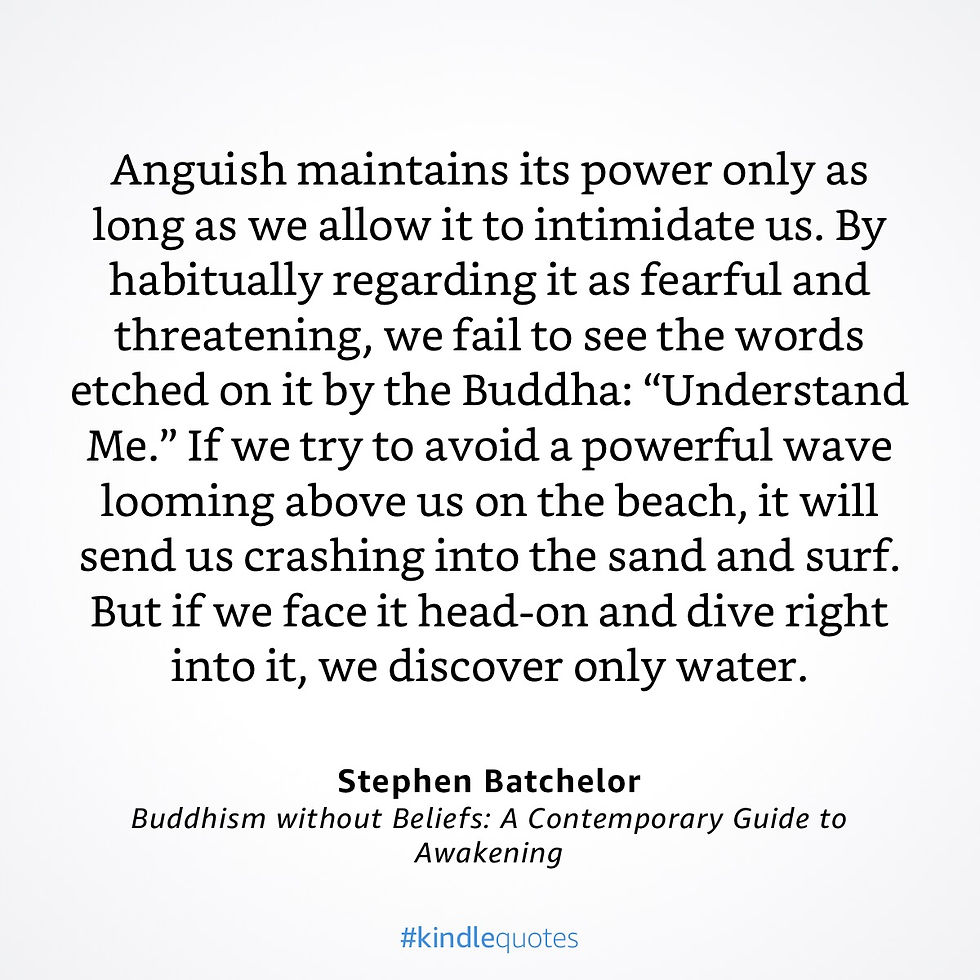
Due to the great deal of overlap between BPD and insecure attachment, it might be hard to separate one from the other. Insecure attachment might be an example of moral injury -- the betrayal of not being cared for when it was reasonable to assume that care would be forthcoming, as well as the betrayal of self-abandonment in an effort to find love and belonging and safety in the absence of that care. We changed ourselves in order to be more acceptable to our caregivers. Dr. Hart wrote, "When you grow up in an environment where distress is ignored, where fear is met with irritation, where need is treated as weakness, your nervous system does not learn 'I am allowed to leave what hurts me.' It learns 'I am allowed to stay as long as I do not cause trouble.' You learn to confuse obedience with safety. You learn to confuse self erasure with maturity. From the outside, these adaptations are often praised as maturity, loyalty, or professionalism. From the inside it is captivity written in a language the body understands perfectly, stay small, stay quiet, stay useful."
Anger and other "emotional displays" might be an adaptive defense to a system that shamed me by refusing to see me, to acknowledge my needs and desires. My refusals to stay with unsatisfying relationships might be the one way I claimed agency all along. Chris Germer in the Mindful Self-Compassion for Shame course said that anger was something he admired in his clients who were dealing with shame. It was an inner sense of self that knew they didn't deserve what they were getting, that yelled, "I matter!" despite all evidence to the contrary. Hart wrote, "Healing begins at the exact point where safety is redefined. Safety is no longer the absence of conflict at any cost. Safety becomes the presence of truth, even when truth rearranges your life. Safety becomes the friend, the therapist, the community, the animal, the self that moves toward you when you are in pain. Safety becomes the environment in which you do not have to earn witness by overperforming or by almost dying."
I have experienced internal conflict with the Sisterhood and felt it threatening based on my past conditioning. I have sacrificed for and been sacrificed in relationship unconsciously. Now, I am claiming this new form agency consciously: my agency to not abandon myself in relationship. I see my own autonomy and other's autonomy more clearly, so I don't need to take things so personally, be so defensive. Hart again, "If your 'safety' requires the constant betrayal of your own perception, it is not safety. It is a slow form of self abandonment. Essential liberty is not the freedom to do whatever you want. It is the freedom to stop abandoning yourself as the cost of belonging."
I want to find a way to get my needs met, feel whole, within relationship. I have been fine on my own. Now I want to figure this out: how can I be with people and still feel whole? The lesson is: to start recognizing my own needs in relationship. The surf girls have shown me that, too. They follow their hearts. They take time for themselves. They care for their bodies and minds, and tend their joy. Instead of being upset at the fractures within the group, I can see that they are caring for themselves -- enacting care and autonomy. And I can too. Again, their example has given me permission to be my fullest self.
I just wish it was with them more often.
Dealing with all of the betrayal and shame, the anger and disappointment, the incredible fear from a lack of security in relationship when I was very young -- these are all demons I have faced, understood, and have begun to integrate. I'm not afraid of them anymore. Along with grief and sorrow, they are welcome here too. It is actually amazing that I am asking the world to meet my needs! Woot! What progress! That I can even consider that my needs could possibly get met in relationship, that I could learn how that works, that I believe it can work -- this is all a sign of massive growth.
Becoming Whole
I often think this little three-year period of time has been my Tibetan three-year retreat or my bardo. The space between lives where I evaluate my previous life and make plans for the next. So much has changed inside my head. While ideas like karma and dependent origination (the causes and conditions of our lives are constantly unfolding in a specific context causing new conditions to arise), and depersonalization (it has little if anything to do with me) allow me to relax and know I control very little in this life, I also know I am not powerless. I can recognize what relationships can and cannot do for me. And I can find some sense of certainty, safety, and lots of love within my own self, which allows me to evaluate my relationships more accurately. Other people hurt me and other people healed me. Both/and. I can do a better job -- a different job -- of deciding who I keep close and who I let go. I can include myself in the circle of compassion and care.
From Jon Kabat-Zinn's Full Catastrophe Living, “No matter how many scars we carry from what we have gone through and suffered in the past, our intrinsic wholeness is still here: what else contains the scars? None of us has to be a helpless victim of what was done to us or what was not done for us in the past, nor do we have to be helpless in the face of what we may be suffering now. We are also what was present before the scarring—our original wholeness, what was born whole. And we can reconnect with that intrinsic wholeness at any time, because its very nature is that it is always present. It is who we truly are.” As BTG constantly tells me, I am already ok.
I grow more and more familiar with my intrinsic wholeness every day; with every interaction I successfully navigate and process, every need I see and attend to, I can rest easier in my Self, and my Self gets simultaneously more solid and more porous with every passing day. As I feel more secure, it is easy to see that I control very little. More and more, I am undefended, flexible, and adjusting to the ever evolving conditions. Emotions pass through me like a surfboard through a wave. Remember surfer strength? That ability to ride the waves with an open heart, vulnerability, and care? Balance, equanimity, grace? Flexibility, attunement, awareness? That continues to develop. I'm not only building my ability to ride that crystal clear wave, that crystal clear invisible wave of clarity, of growth, of loveliness, of joy and pain, rising to greet whatever comes; I realize I am that wave. I am more solid, the thing I have been looking for that I can count on? She's here. It's me. I'm clarified like a broth -- the defenses and misguided ideas get filtered away and I am clearer. The invisible certainty and solidity of my Self getting uncovered. Flying through the air, not attached but intimate, with myself, and with others.

I'm reminded of the Einstein "optical delusion" quote, which may be more accurately quoted as this, "A human being is a spatially and temporally limited piece of the whole, what we call the 'Universe.' He experiences himself and his feelings as separate from the rest, an optical illusion of his consciousness. The quest for liberation from this bondage [or illusion] is the only object of true religion. Not nurturing the illusion but only overcoming it gives us the attainable measure of inner peace." I am slowly but surely learning to overcome the illusions I learned a child. Sangha, Sisterhood, has been key to it all. I am real because I am one of them; I've been included and reflected so I feel more myself, more solid. Now, I can be a better partner in the mess with and for people as real as me. Being steadier myself, I can then be more flexible and balanced instead of rigid, and that helps me be a better member of the sangha. My own autonomy is developed in community, then I am better able to participate in that community, even as it grows and changes.
When I wrote about the whole atonement with the father ordeal, I mentioned a boon. Joseph Campbell, in his wonderful map of the spiritual path, The Hero With a Thousand Faces, described the boon at the end of a journey. My boon, which I realize in a new context now, is to realize that I have nothing to lose. I have nothing whatever to lose. The boon a few weeks ago was that I could sit there and talk to my mom and bear witness to her struggle without any nervousness. I was just really able to be there for her and recognize that none of this had anything to do with me. None of this had anything to do with me. Now, I realize the same thing with my surf sisters. Both by entering and exiting, they add to my life. I am grateful for them, for what they've taught me, for what I've been able to learn because of them. In this gratitude for whatever comes, I'm free. I'm truly free. I have nothing to lose, none of us has anything to lose, and that's the boon. Not that it's pain-free, but that pain is tolerable, normal, simply part of it. I can be here and just take it all in. Live my life, find my joy, and quit thinking I need to sacrifice myself in order to find belonging. On some level, I already belong everywhere I need to.
Now, if only I could stay on this wave...clarity, it seems, also ebbs and flows. Impermanence applies to everything. Meditation helps keep me balanced on the board -- my little strip of security -- sailing through the air over crystal clear, invisible water. Sallie Tisdale, in her great article "Self-Care for Future Corpses," writes, "Watch from inside yourself, unable to escape. Listen helplessly to the repeating chorus. Wait for the moment when you can witness yourself—that moment when you see yourself arising and abiding for less than no time at all, then falling away into nothing. The wave lifts from the sea, crests, breaks, and disappears back into the water. Nothing is lost. Wait for that moment. Wonder as your self appears and disappears. See the little girl, long gone, raise her head for a moment and wink. See the young woman fade from sight. See yourself going away.... Know that your precious, infinitely beloved, and irreplaceable self will dissolve like a sand castle, grain by grain—and what a relief it is to know. You exist in a great space of knowing, filled with the shared ephemerality of all things. You are like a spring the size of the world that begins to unwind, and you smile because you know it’s going to keep unwinding forever. Lean back, throw your leg over the side of the chair, look around, and say oh. Say yes. Yes. Everything will be all right. It’s going to be all right. You are already completely well."


